Mardi Himal Peak Climbing
Trip Facts
Overview
Mardi Himal Peak Climbing Overview
The Mardi Himal Peak Climbing is one of the most exciting adventure experiences in the Annapurna region of Nepal, combining trekking, hiking, and basic alpine climbing in a short yet rewarding journey. Located just east of the popular Annapurna Massif, this peak offers a perfect introduction for trekkers who want to step beyond classic trekking routes and experience light peak climbing in the Himalayas.
Unlike highly technical expeditions, Mardi Himal Peak Climbing is considered a trekking peak adventure. It is suitable for trekkers with good physical fitness and some prior trekking experience in Nepal. The route passes through lush rhododendron forests, traditional Gurung villages, and high alpine ridges with dramatic views of snow-covered giants like Machhapuchhre (Fishtail), Annapurna South, and Hiunchuli.
The journey often begins from the scenic lakeside city of Pokhara, a major hub for trekking in Nepal and a gateway to many famous routes such as the Annapurna Base Camp Trek and Annapurna Circuit Trek. From there, the trail gradually ascends through Forest Camp, Low Camp, and High Camp before reaching Mardi Himal Base Camp and the climbing section.
Mardi Himal Peak Climbing is not just about reaching the summit—it is about experiencing the diversity of Nepal’s mountain landscapes. Trekkers pass through peaceful forests, open alpine valleys, and rugged ridgelines that feel far away from crowded trekking routes. This makes it an ideal alternative for those looking for a quieter but equally stunning Himalayan adventure.
In terms of difficulty, Mardi Himal is considered moderate. While it does not require advanced mountaineering skills, basic knowledge of using climbing equipment such as crampons and an ice axe is helpful, especially during the final ascent, depending on seasonal snow conditions. The reward, however, is extraordinary—panoramic views of the Annapurna range and surrounding Himalayan peaks.
For adventure lovers interested in Trekking in Nepal, climbing in Nepal, or hiking in Nepal, Mardi Himal Peak Climbing is a perfect blend of all three. It offers the thrill of a trekking peak, the beauty of the Annapurna region, and the cultural richness of local mountain villages.
Whether you are planning a tour in Nepal or looking to upgrade from trekking routes like the Annapurna Base Camp Trek or the Annapurna Circuit Trek, Mardi Himal Peak Climbing is a memorable step into Himalayan adventure.
Highlights of Mardi Himal Peak Climbing
Mardi Himal Peak Climbing is a short yet spectacular Himalayan adventure in the Annapurna region, offering a perfect mix of trekking, hiking, and light climbing in Nepal. It is one of the most rewarding trekking peak experiences for adventure lovers who want fewer crowds but incredible mountain scenery.
- Close-up views of the Annapurna Range
- Enjoy breathtaking panoramas of Annapurna Massif, Machhapuchhre (Fishtail), Hiunchuli, and Annapurna South throughout the journey.
- Diverse trekking landscapes
- The trail passes through dense rhododendron forests, peaceful alpine meadows, and dramatic ridgelines, making it one of the most scenic trekking routes in Nepal.
- Perfect trekking peak experience
- Mardi Himal is a great introduction to peak climbing in Nepal, offering a non-technical but adventurous summit experience for trekkers with good fitness.
- Cultural village experience
- The route passes through traditional Gurung settlements where trekkers can experience local Himalayan culture, hospitality, and lifestyle.
- Adventure above the clouds
- From High Camp to Mardi Himal Base Camp and summit sections, trekkers feel the real Himalayan climbing atmosphere without extreme technical difficulty.
- Less crowded than the major trekking routes
- Compared to popular trails like the Annapurna Base Camp Trek and Annapurna Circuit Trek, Mardi Himal offers a quieter and more peaceful trekking experience.
- Unforgettable sunrise and sunset views
- Golden light over the snow peaks creates one of the most photogenic moments in the Annapurna region.
Best Time to Visit Mardi Himal Peak Climbing
Choosing the right season is very important for a safe and enjoyable trekking and climbing experience in Nepal. Mardi Himal Peak Climbing is a hidden gem in the Annapurna region, perfect for those looking to combine trekking in Nepal, climbing in Nepal, and hiking in Nepal in one short but powerful adventure. With stunning Himalayan views, cultural richness, and a less crowded trail, it stands as an excellent alternative to classic routes like the Annapurna Base Camp Trek and the Annapurna Circuit Trek.
Spring (March to May)
- Best overall season for Mardi Himal Peak Climbing
- Clear mountain views and stable weather
- Rhododendron forests bloom in full color
- Comfortable temperatures for trekking and hiking
Autumn (September to November)
- The most popular trekking season in Nepal
- Excellent visibility and dry weather conditions
- Stable trails ideal for trekking peaks and climbing
- Perfect for photography and mountain views
Winter (December to February)
- Cold temperatures and possible heavy snow
- Suitable for experienced trekkers only
- Fewer crowds and peaceful trails
- Some high sections may become challenging
Monsoon (June to August)
- Not recommended for Mardi Himal Peak Climbing
- Slippery trails, leeches, and poor visibility
- Frequent rain and flight/road disruptions
How Difficult is Mardi Himal Peak Climbing?
Mardi Himal Peak Climbing is generally considered a moderate trekking peak, making it suitable for adventurous trekkers who have good physical fitness but limited or no prior mountaineering experience.
Unlike highly technical expeditions in the Himalayas, this climb does not involve complex rock climbing or advanced ice techniques in normal conditions. However, it still demands endurance, altitude tolerance, and basic hiking experience in the high mountains of Nepal.
Difficulty Level Breakdown
- Overall Grade: Moderate (Trekking Peak Level)
- Maximum Altitude: Around 5,500–5,587 meters (depending on the summit point)
- Technical Skills Required: Basic use of crampons, ice axe (seasonal), and rope safety may be needed in snowy conditions
- Physical Demand: High endurance required due to long ascents and steep ridges
- Altitude Factor: The main challenge is altitude, not technical climbing
What Makes It Challenging?
- High altitude effects (AMS risk): Above 4,000m, oxygen levels drop significantly
- Steep ridge sections: The final approach toward the summit can be narrow and exposed
- Snow and weather conditions: In winter and early spring, snow can increase the difficulty
- Long trekking days: Continuous uphill trekking from Low Camp to High Camp and beyond
Is it still suitable for Beginners?
Mardi Himal Peak Climbing is often chosen by trekkers who have already completed popular routes like the Annapurna Base Camp Trek or are familiar with high-altitude trekking in the Annapurna Massif region.
It is considered easier than many other Himalayan peak climbs because:
- No permanent technical climbing route
- No extreme glacier travel in normal seasons
- Well-established trekking trail up to High Camp
- Comparison with Other Treks in Nepal
- Easier than most technical peaks in Nepal
Slightly more demanding than standard trekking routes like the Annapurna Circuit Trek
More adventurous than regular trekking but less technical than true mountaineering expeditions
Food and Accommodation during Mardi Himal Peak Climbing
Food and accommodation on the Mardi Himal Peak Climbing route are simple, local, and designed mainly for trekkers exploring the high Himalayas of Nepal. Although facilities become more basic as you go higher, the experience is warm, authentic, and well-suited for adventure trekking in Nepal.
Accommodation on the Route
Accommodation is mainly in tea houses and mountain lodges, which are small, family-run guesthouses found along the trail.
- Lower Region (Kande, Forest Camp, Low Camp)
- Comfortable tea houses with basic private or shared rooms
- Beds with blankets and mattresses provided
- Attached or shared bathrooms (hot showers available in some places)
- Slightly better facilities due to easier access
Higher Region (High Camp & above)
- Very basic mountain lodges
- Small rooms with simple bedding
- Limited electricity (solar-powered in most places)
- Shared toilets, often outside the main building
- Cold nights, especially in winter and early spring
Accommodation becomes more rustic as you approach the alpine zone near Mardi Himal Base Camp and summit region, but the hospitality remains warm and welcoming.
Food on Mardi Himal Peak Climbing Route
Food is freshly prepared in tea houses, offering a mix of Nepali, Tibetan, and basic international meals to support trekkers’ energy needs.
Common Meals Available:
Dal Bhat (rice, lentil soup, vegetables – unlimited refills in most places)
- Noodles, fried rice, and pasta
- Potatoes (boiled, fried, or curry style)
- Momo (dumplings – very popular in Nepal)
- Tibetan bread and chapati
- Eggs (boiled, fried, or omelet)
- Soup (garlic soup is highly recommended for altitude)
- Drinks and Extras
- Tea (milk tea, ginger tea, lemon tea)
- Coffee (instant coffee in most lodges)
- Bottled water and boiled water
- Hot chocolate in some higher lodges
Garlic soup is highly recommended for altitude sickness prevention during trekking and climbing in Nepal.
Food & Accommodation Experience
- As altitude increases, menu options become more limited and slightly more expensive due to transportation difficulties
- Fresh vegetables and meat availability decrease in higher camps
- Everything is carried by porters or mules, especially in remote sections of the Annapurna region
- Expect simple living conditions, but very supportive local hosts
Food and accommodation during the Mardi Himal Peak Climbing are basic but sufficient for a high-altitude trekking peak experience. While luxury is not expected, the warmth of local tea houses, fresh mountain meals, and peaceful Himalayan surroundings make the journey truly special. This route is perfect for trekkers exploring trekking in Nepal, hiking in Nepal, climbing in Nepal, and adventure tours in the Annapurna region, especially for those combining experiences like the Annapurna Base Camp Trek or exploring the broader Annapurna Massif region.
Itinerary
Day 1: Arrival in Kathmandu (1,400m) and Transfer to Hotel
Arrival at Tribhuvan International Airport in Kathmandu, the capital of Nepal. Meet our representative and transfer to hotel. Rest and trek briefing for Mardi Himal Peak Climbing preparation. Explore Thamel tourist area if time permits.
Day 2: Drive from Kathmandu to Pokhara Height: 820m | Distance: 200 km | Time: 6–7 hours drive
Scenic journey from Kathmandu to Pokhara, the gateway of Annapurna trekking routes. Enjoy views of rivers, hills, and countryside. Pokhara is a beautiful lake city popular for trekking in Nepal and adventure tourism.
Day 3: Drive to Kande & Trek to Forest Camp (2,550m), Distance 12 km | Time 5–6 hours trek
Short drive to Kande and begin trekking. The trail climbs through rhododendron and oak forests. First real experience of hiking in the hills.
Day 4: Forest Camp to Low Camp (3,150m) Distance 8 km | Time 5 hours trek
Gradual ascent through dense forest with occasional mountain views. The trail becomes steeper as you gain altitude. First clear view of Machhapuchhre.
Day 5: Low Camp to High Camp (3,580m), Distance 6 km | Time 4–5 hours trek
Trek above tree line with stunning panoramic views of the Annapurna range. Ridge walking offers dramatic landscapes. An important acclimatization day before the climbing section.
Day 6: Acclimatization & Exploration at High Camp Height: 3,580m | Distance 3–5 km (hike) | Time 3 hours
Rest day for altitude adjustment. Optional hike toward Upper Viewpoint for Himalayan sunrise and preparation for Mardi Himal Peak Climbing section.
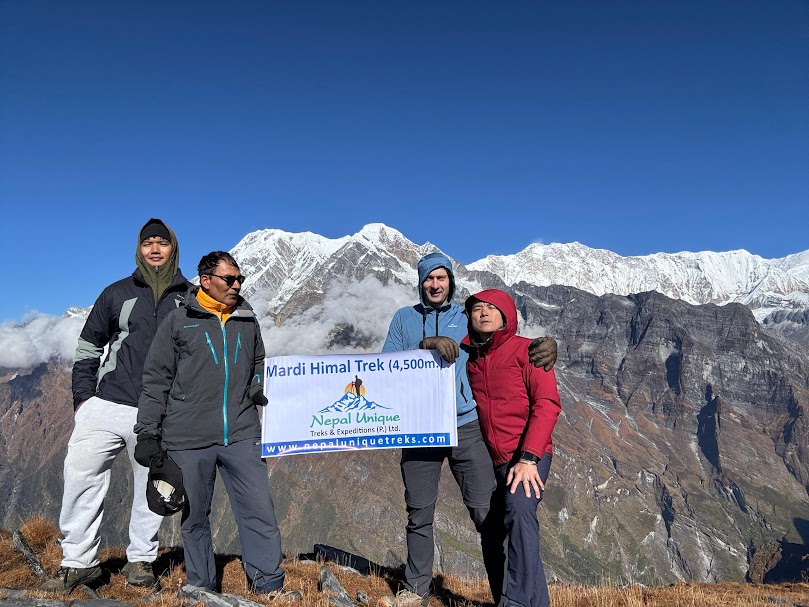
Day 7: High Camp to Mardi Himal Base Camp (4,500m) & Return
Early morning trek to Base Camp through rocky and snowy terrain. Experience the extreme Himalayan beauty of the Annapurna region. Return to High Camp for an overnight stay.
Day 8: Summit Attempt – Mardi Himal Peak (5,587m) & Return to High Camp,Distance 6–7 km | Time 8–10 hours trek/climb
Main climbing day. Early start for summit attempt depending on weather conditions. Use of basic climbing gear may be required. Stunning 360° Himalayan views from the top. Return to High Camp.
Day 9: Trek Down to Low Camp (3,150m) Distance 14 km | Time 6–7 hours trek
Descend carefully through ridges and forests. Easier walking but long downhill sections. Celebrate a successful Mardi Himal Peak Climbing adventure.
Day 10: Low Camp to Siding Village (1,750m) Distance 10 km | Time 4–5 hours trek
Final trekking descent through villages and forest trails. Experience the local Gurung culture and traditional lifestyle of the Annapurna region.
Day 11: Drive to Pokhara (820m) Distance 45 km | Time 2–3 hours drive
Short jeep ride from Siding to Pokhara. Rest and celebrate the successful completion of the trekking peak adventure in Nepal. Free time at the lakeside.
Day 12: Return to Kathmandu (1,320m) Distance: 200 km | Time: 6–7 hours drive or 25 min flight
Drive back to Kathmandu. Celebreat End of the Mardi Himal Peak Climbing journey in Kathmandu, having a farewell dinner and distributing the Certificate of Successful Journey.
Day 13: Departure to your destination 1400 m, 30 m
Nepal Unique Treks Team will drop you to the International Airport, Three Hours Befor then your flight schedule